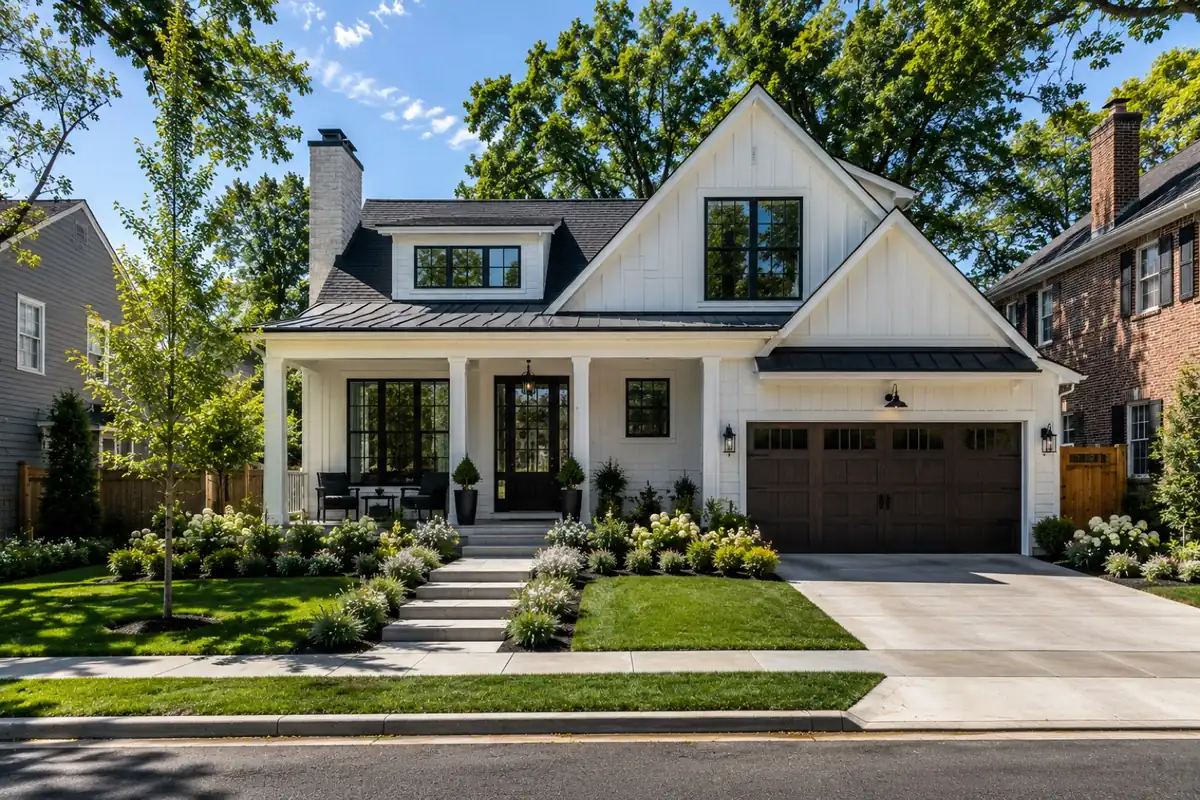
Texas builds more new homes than any other state, and in the fast-growing suburbs of Dallas–Fort Worth, Houston, San Antonio and Austin a large share of what is for sale has never been lived in. Buying new is a genuinely good option for a lot of families. It is also a different transaction from buying a resale, and most of the differences are not in your favor by default.
The person in the model home works for the builder
This is the single most important thing to understand, and it is rarely stated plainly. The friendly, knowledgeable representative in the sales office is employed by or contracted to the builder. They are professional and often genuinely helpful, but they represent the seller's interest. They are not your advocate, and any information you volunteer to them — your budget ceiling, your urgency, your fallback plan — is information given to the other side of the negotiation.
You are entitled to your own representation, at no additional cost to you in the typical arrangement, because builders generally account for cooperating brokerage in their pricing. But there is a catch that catches people constantly: most builders require your agent to accompany you on your first visit to register the relationship. Walk in alone, register yourself, and you may have forfeited the ability to bring in representation later on that community. If you are even considering an agent, bring them the first time.
The contract is the builder's, not the standard form
Resale transactions in Texas typically run on promulgated forms that are familiar and balanced. Builder contracts are drafted by the builder's counsel. They are longer, they allocate risk differently, and the terms you are used to — the option period, specific remedies, deadlines — may be structured differently or absent.
Read it. Have someone who reads these regularly read it. Pay particular attention to what happens if construction runs late, what your remedies are if it does, what happens to your deposit under various scenarios, how change orders are priced, and what the dispute resolution clause requires of you.
Where the negotiation actually is
Builders are often reluctant to cut the base price, because a recorded low sale affects the comparables for every remaining home in the community. That does not mean there is no negotiation — it means the negotiation happens elsewhere:
- Design center allowance. Upgrades carry substantial margin. An allowance is frequently easier to obtain than a price reduction.
- Closing cost contributions, particularly when tied to the builder's affiliated lender.
- Rate buy-downs, which builders use heavily and which can be worth more than a modest price cut.
- Included upgrades — landscaping, blinds, fencing, appliances, epoxy floors — that would otherwise be your first-year expenses.
- Inventory and standing homes. A completed spec home the builder wants off the books is the most flexible thing on the lot.
Do compare the affiliated lender's package honestly against outside financing. The incentive may genuinely be the better deal, or the rate may be worse by enough to erase it. Get both numbers before deciding.
Yes, you still inspect a new home
New does not mean flawless. Homes are assembled quickly by many different trades, and defects are normal rather than scandalous. Independent inspections are worth every dollar at three points:
- Pre-drywall, while framing, plumbing, electrical and mechanical are still visible. This is the one people skip and the one that finds the expensive things.
- Before closing, as a full inspection, not just the builder's walkthrough.
- Before the first-year warranty expires, so anything that has emerged gets submitted while it is still covered.
Use your own inspector, not one the builder recommends. That is not a comment on the builder's honesty; it is basic independence.
Understand the warranty structure
New homes typically carry a tiered warranty — a short period covering workmanship and materials, a longer one on major systems, and a longer one still on structural elements. The details vary by builder and by the warranty administrator they use. Ask for the actual document before you sign, not a summary, and note what the claims process requires of you.
The costs that arrive after move-in
New communities frequently sit inside a MUD, carry an HOA, and sometimes a PID as well. The tax rate at a brand-new address can be materially higher than at an established one nearby, because the infrastructure is still being paid for. Our Texas property taxes guide covers how these stack.
Budget too for what the builder did not include. Fencing, landscaping beyond the front yard, window coverings, gutters and a mailbox are commonly the buyer's problem, and together they are not a small number. Run the honest monthly figure through the mortgage calculator with taxes and insurance included.
A word on the early phases
Buying in phase one of a large community means living beside construction for a while, and it means the amenities in the rendering may be years out. That is a fair trade for early pricing if you go in knowing. Ask what is actually committed in writing versus what is aspirational on the site plan.
Looking for an agent who actually works this area? Get matched free — we connect you with one license-verified local agent (plus at most one backup), never a call center and never a list sold to five people. Matching is always free for buyers and sellers.
Standing inventory versus building from a lot
These are different purchases with different leverage. A spec or inventory home is already built or nearly so — you see exactly what you are getting, you close sooner, and the builder has capital tied up in it, which is where your negotiating room comes from. A build-to-order home lets you choose the lot, floor plan and finishes, but the timeline is an estimate, the price is set earliest, and you are committing to something you cannot walk through.
If certainty matters more to you than customisation, inventory is usually the better trade — and generally the better deal.
Lot premiums and what they are actually worth
Builders charge premiums for lots they consider superior — greenbelt backing, cul-de-sac position, larger size, a particular orientation. Some of those premiums hold their value at resale and some do not. A genuinely private greenbelt lot tends to hold; a premium for a slightly wider frontage often does not.
Before you pay one, ask your agent what that premium is likely to return when you sell. And check what is planned for the land behind the lot: "greenbelt" sometimes means permanent open space and sometimes means a future phase.
Documenting the walkthrough properly
At your pre-closing walkthrough, everything you want corrected should be written down, acknowledged and dated. Verbal assurances from a site superintendent — however sincere — do not survive personnel changes or a busy quarter. Photograph the items, put them in writing, and get confirmation in writing.
Keep the same discipline for warranty claims after you move in. Submit in writing through the process the warranty specifies, keep copies, and note the deadlines, particularly the end of the first-year workmanship period, which arrives faster than anyone expects.
Frequently asked questions
Do I need an agent to buy new construction?
You are not required to have one, but you are negotiating against a professional who represents the seller. Representation typically costs you nothing directly — just bring them on your first visit, because registering yourself alone can disqualify you from adding one later.
Will the builder lower the price if I ask?
Usually less readily than they will improve the package, because a low recorded sale affects their remaining inventory. Push on incentives, upgrades and rate buy-downs — that is where the room generally is.
Is a pre-drywall inspection really necessary?
It is the highest-value inspection of the three, because it is the only moment the structure and systems are visible. Once drywall is up, those things are hidden for the life of the house.
Are new homes in Texas covered if the foundation moves?
Structural coverage is typically the longest tier of a new-home warranty, but the definitions and claims process matter enormously. Read the actual warranty document rather than relying on a verbal summary.
Agents: if you work this market, join the network. Your profile is free, you keep 100% of your commission, and placement is never for sale — you're ranked on your verified record in the areas you actually cover, not on an ad budget.