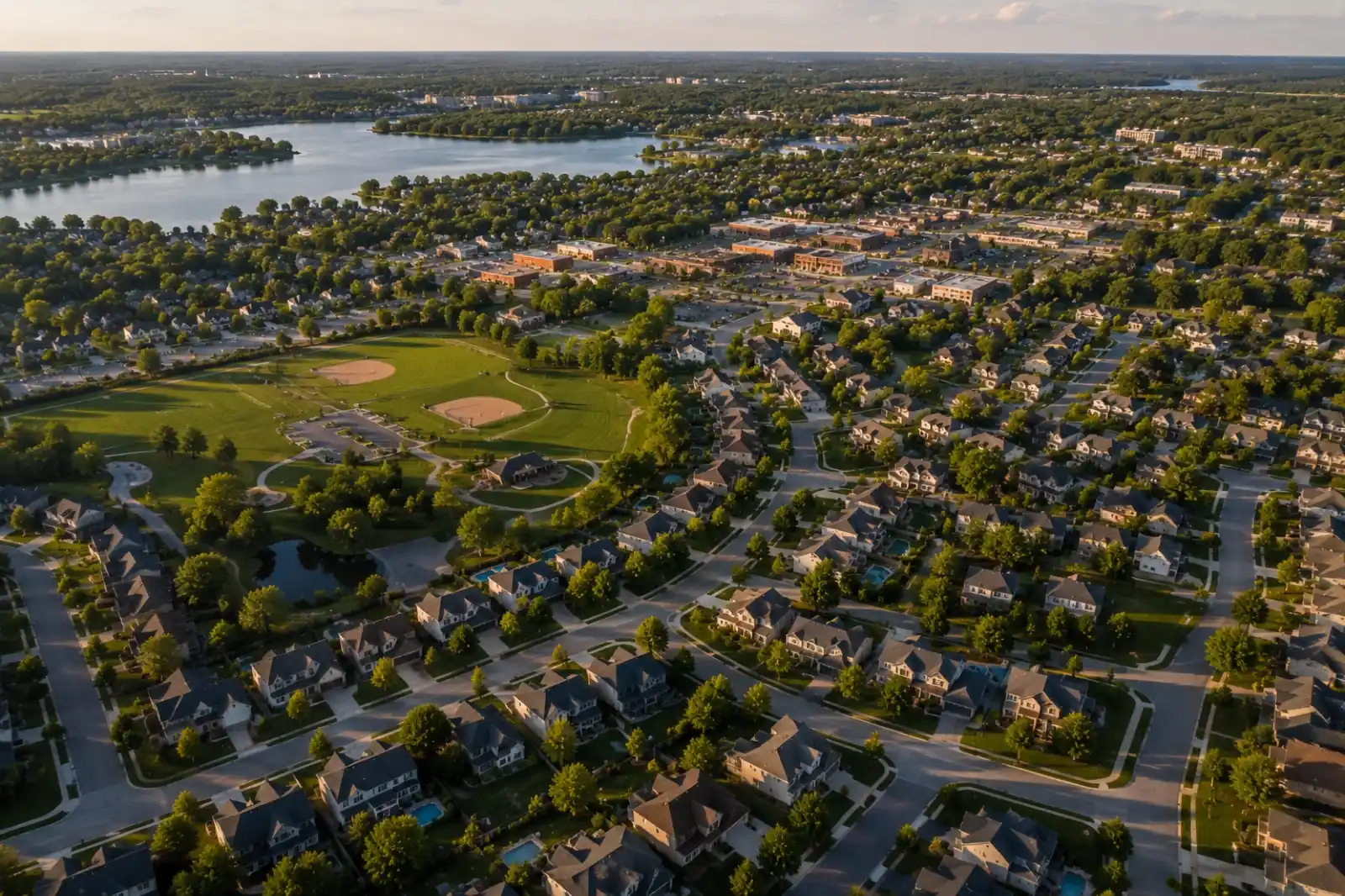
Houston is the largest city in Texas and one of the largest in the country by land area, which means "where should I live in Houston" is a bigger question than it sounds. The city is also famous for having no conventional zoning code, so land uses mix in ways newcomers find surprising. Here is a practical way to narrow it down.
Start with the loops
Houstonians navigate by ring roads, and it is genuinely the clearest mental model. Inside the 610 Loop is the urban core — older housing stock, mature trees, walkable pockets, and proximity to downtown, the Texas Medical Center and the museum district. Between 610 and Beltway 8 is a mix of established suburbs and denser development. Outside the Beltway is where the master-planned communities and most of the new construction sit.
Inner Loop character
The Heights is a historic district with bungalows, a strong walkable commercial spine and a lot of teardown-and-rebuild activity. Montrose is the city's most eclectic area, dense and diverse. Rice Village and West University are anchored by the university and the Medical Center and skew family-and-professional. River Oaks is the traditional prestige address. Downtown, Midtown and EaDo have grown residentially and appeal to people who want to be central.
Inner Loop buying comes with older-home realities — foundations, plumbing, electrical, drainage — and, because of the lack of conventional zoning, the genuine possibility that the lot next door changes use. Ask what is entitled nearby, not just what is there today.
The employment centers shape everything
Houston has several distinct job cores rather than one. The Texas Medical Center, Downtown, the Energy Corridor on the west side, Greenway/Galleria, and the Clear Lake area near NASA all pull commuters in different directions. Which one you orbit narrows your search more effectively than any other single factor, because cross-town commuting here is punishing.
The master-planned communities
Outside the Beltway, much of the growth is in large master-planned developments — the Katy and Cypress corridors to the west and northwest, The Woodlands and Spring to the north, Sugar Land and Pearland to the south, Clear Lake and League City to the southeast. They typically offer newer housing, amenity packages, and organised school feeder patterns.
They also typically come with an HOA and often sit within a MUD, both of which carry costs. Read our Texas property taxes guide for how a MUD affects your monthly number, and get the HOA documents before your option period expires, not after.
Flood risk is a Houston-specific discipline
This is the one thing you should not delegate to a general impression. Houston is flat, it is coastal-influenced, and it has a genuine history of significant flooding. What matters is the specific property: its elevation, its drainage, whether it has flooded before, what has changed upstream since, and what flood insurance costs for it.
Do not rely on flood-zone designation alone as a pass/fail. Properties outside designated high-risk zones have flooded. Ask directly, ask the neighbours if you can, get the insurance quote during the option period, and treat an evasive answer as information.
How to narrow it down
- Pick your employment center first.
- Decide Inner Loop character versus master-planned amenity — they are genuinely different lifestyles.
- Verify the school attendance zone for the exact address.
- Run the flood question on the specific property.
- Get the full tax picture including any MUD.
Looking for an agent who actually works this area? Get matched free — we connect you with one license-verified local agent (plus at most one backup), never a call center and never a list sold to five people. Matching is always free for buyers and sellers.
Deed restrictions instead of zoning: what that means in practice
Houston's lack of conventional zoning is famous, but the practical mechanism people miss is that deed restrictions do much of the same work in the neighborhoods that have them. Many established subdivisions are governed by recorded restrictions covering use, setbacks, structures and sometimes appearance — and where those restrictions have lapsed or were never in place, the character of a block can change quickly.
This cuts both ways. It is why a townhome development can appear beside single-family homes, and it is also why some Houston neighborhoods have preserved their character remarkably well. Before you buy, find out what restrictions apply to the property, whether they are actively enforced, and what is happening on the nearby lots.
Older housing stock: the specific things to check
Inside the Loop you are frequently buying a home built decades ago, sometimes with a renovation history of variable quality. The items that reliably matter:
- Foundation performance on Houston's clay soils, including whether previous repair carries a transferable warranty.
- Sewer lines — a camera scope on an older home is cheap relative to what it can find.
- Electrical capacity and the presence of any panel types that insurers treat unfavourably.
- Renovation permits. Unpermitted work is common and can complicate insurance, resale and any future permitted project.
- Tree roots and drainage, which interact with both foundations and sewer lines.
Elevation, not just the flood map
Because Houston is flat, small differences in elevation matter more than they intuitively should. An elevation certificate documents where the lowest floor sits relative to the base flood elevation, and it affects both risk and flood insurance pricing. For any property where water is a question — which, in Houston, is most of them — it is a document worth having rather than a formality.
Ask also what has changed upstream. Development alters drainage, and a property's history is a guide to its past, not a guarantee about its future.
Frequently asked questions
Does Houston really have no zoning?
Houston has no conventional zoning ordinance, though development is still shaped by deed restrictions, ordinances and platting rules. The practical effect is more mixing of uses than you would see elsewhere — worth checking around any home you are serious about.
Is it safe to buy a home that has flooded before?
It can be, if you understand what happened, what has been remediated, what has changed in the surrounding drainage, and what insurance now costs. What is not safe is buying without asking.
Which Houston suburb is best for families?
There is no single answer — Katy, Cypress, The Woodlands, Sugar Land, Pearland and League City all draw families for different reasons. Start from your commute, then compare specific attendance zones rather than district reputations.
How much does a Houston agent cost me as a buyer?
Matching through Homegrity is free. Compensation arrangements in a transaction are negotiable and should be explained to you in writing before you commit to anything — ask your agent to walk you through it plainly.
Agents: if you work this market, join the network. Your profile is free, you keep 100% of your commission, and placement is never for sale — you're ranked on your verified record in the areas you actually cover, not on an ad budget.